

Can building automation save energy?
Well-designed controls can reduce avoidable energy consumption, but no single savings percentage applies to all buildings. Outcomes depend on the existing system, occupancy, equipment condition and operation.
Where savings arise
Common opportunities include correcting HVAC time schedules, preventing simultaneous heating and cooling, improving setpoints, detecting unexpected base loads and resolving control faults.
Why commissioning matters
Installing a sophisticated BMS does not guarantee efficient operation. Sensors, control sequences, plant coordination and alarm priorities require commissioning and regular verification.
How to measure improvement
Choose a credible baseline, record relevant operating conditions, implement changes and compare results over representative periods. Weather, occupancy and production changes must be considered before claiming savings.
Investor perspective
A useful proposal explains actions, expected risks and a method for verifying results. Unsubstantiated fixed-percentage savings claims should be avoided.
The most common improvement opportunities
Ventilation may operate for longer than necessary because a building uses an inherited schedule. Cooling and heating may both be active in the same zone. Night setpoints may have been disabled after a temporary comfort complaint and never reinstated. Pumps and fans may run at constant speed although a variable-speed strategy could be appropriate. None of these issues can be solved simply by purchasing a new dashboard: the actual operation and sequence must be checked.
Why a savings percentage can be misleading
A building that already has correctly commissioned controls will have a different potential from one with extensive faults. Local climate, plant capacity, occupancy, opening hours and the level of previous maintenance all matter. A quoted percentage without a baseline and a defined measurement boundary should not be presented as a guaranteed result.
For example, comparing energy consumption before and after a retrofit without correcting for unusually cold weather may produce a false conclusion. The same applies if production volume, the number of occupied rooms or ventilation demand changes between measurement periods.
A practical measurement and verification approach
- Define the affected building or technical subsystem and establish a representative baseline.
- Collect historical energy data and operating variables, including important weather or occupancy indicators.
- Record control changes, dates and any simultaneous equipment replacements.
- Compare the post-change period against a suitable adjusted baseline.
- Report the assumptions and uncertainty, not only the most favourable number.
This turns energy efficiency into a measurable engineering process rather than a marketing claim.
Where improvements usually come from
- Matching schedules to real occupancy and shutting down unnecessary operation.
- Improving heating and cooling coordination and avoiding opposing demands.
- Correcting sensors and poorly tuned control loops.
- Using demand-controlled ventilation where it fits the system design.
- Detecting recurring faults and checking that maintenance changes remain effective.
Do not promise one saving percentage for every building
The baseline condition matters. A poorly configured building can offer substantial potential, while a recently commissioned and well-managed installation may have relatively little remaining scope. Results depend on weather, occupancy, user comfort targets, equipment efficiency and maintenance.
How to demonstrate results
Agree on a baseline and a measurement-and-verification period. Record which control changes were made, normalise for major changes where appropriate and compare equivalent operating conditions. If data or metering coverage is insufficient, the uncertainty must be stated rather than presenting a precise-looking percentage.
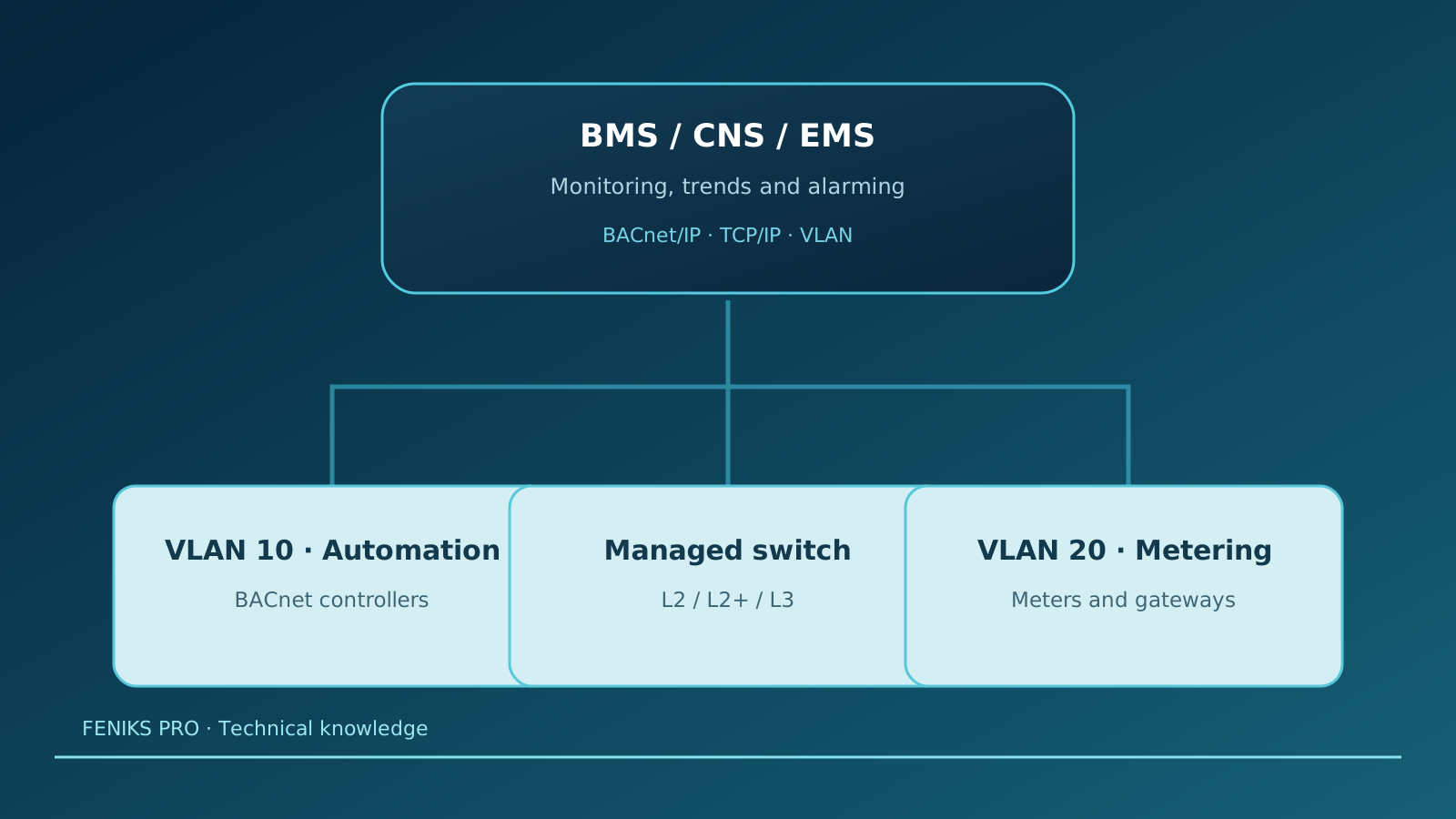 Network switches in building automation: L2, L2+ and L3 for BACnet/IPRead article ↗
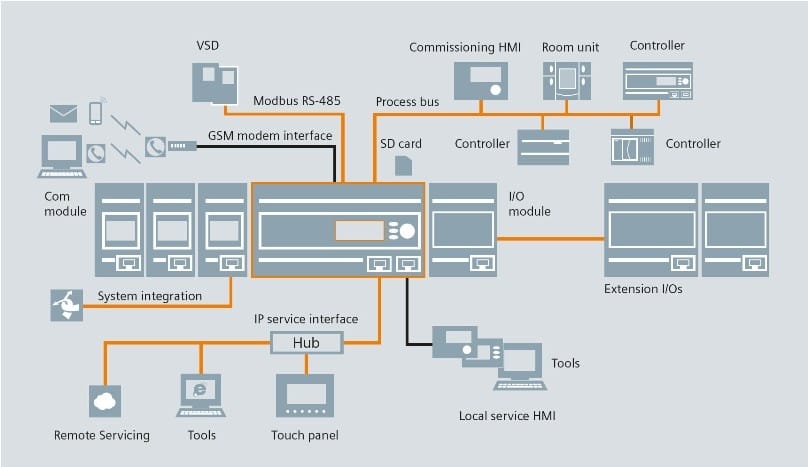 Five building automation mistakes that cost investors moreRead article ↗
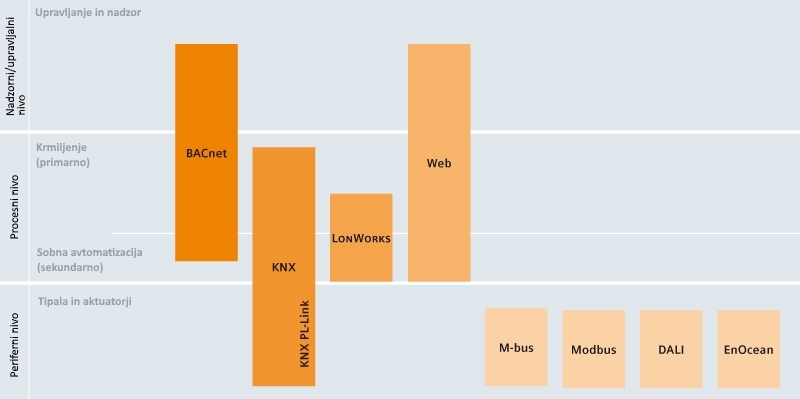 BACnet, Modbus or KNX: which protocol and when?Read article ↗