01
Two-way and three-way valves
Modulating flow and mixing are central functions in hydronic HVAC circuits. Valve selection must account for design flow, pressure and control authority.

Choose suitable control valves and actuators for stable operation of heating, cooling and ventilation systems.
Choose suitable control valves and actuators for stable operation of heating, cooling and ventilation systems.
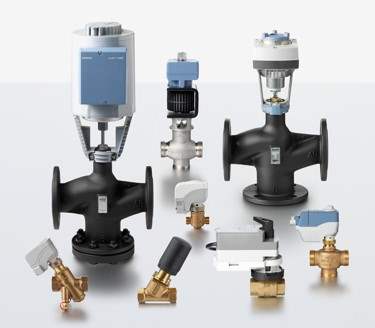
Modulating flow and mixing are central functions in hydronic HVAC circuits. Valve selection must account for design flow, pressure and control authority.
PICV technology can simplify balancing and improve control stability where pressure variations would otherwise affect flow.
The Staefa Control System tradition of directly actuated magnetic valves reaches back to at least the 1980s. Read our dedicated historical and technical overview for confirmed milestones.
In a heating or cooling system, the valve converts a controller's demand into a change in fluid flow. Two-way, three-way and pressure-independent valves are selected according to the hydraulic circuit, design flow and available differential pressure.
Check the valve's nominal size, Kvs or flow setting, operating pressure, temperature range, actuator stroke or force, fail-safe needs and control signal. Poor sizing can cause unstable regulation, noise or unsatisfactory heat transfer even if the BMS logic is correct.
Motorised and electromagnetic actuators have different mechanical and dynamic characteristics. Some products provide diagnostic or digital communication options. These capabilities are product-specific; verify the exact datasheet and installation instructions.
See our magnetic modulating valves and intelligent valve pages for more technical background.