01
Understand the building at a glance
Operator graphics, equipment states, alarm handling and historical trends support everyday operation and troubleshooting.

Bring HVAC, technical alarms, trends and operator controls together in a clear building management environment.
Bring HVAC, technical alarms, trends and operator controls together in a clear building management environment.
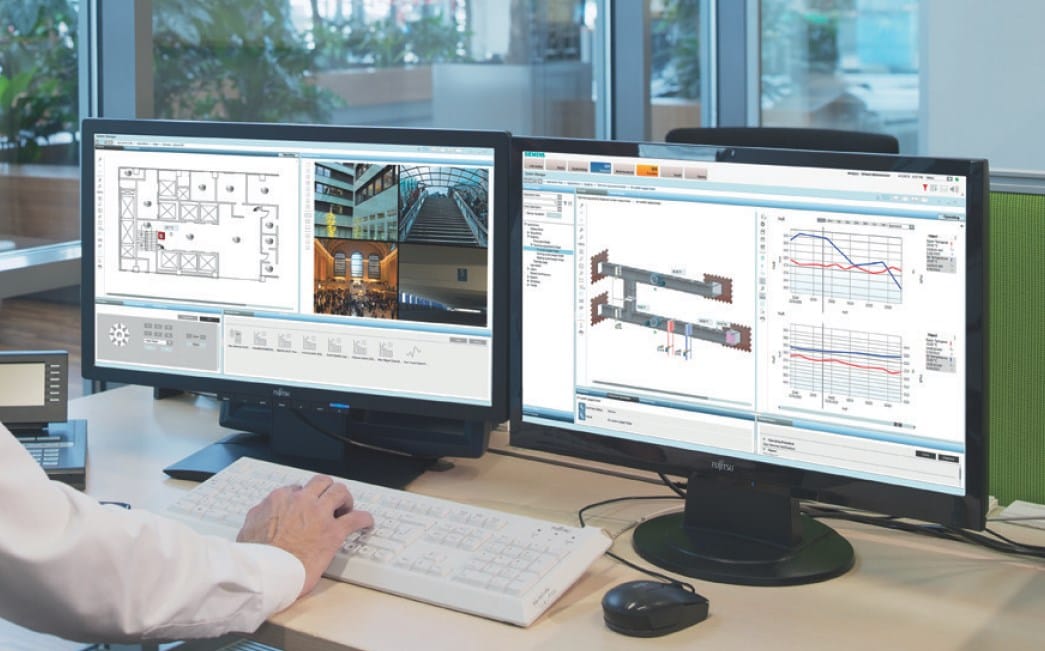
Operator graphics, equipment states, alarm handling and historical trends support everyday operation and troubleshooting.
BACnet and other supported interfaces allow multiple controllers and subsystems to be displayed in one management platform, subject to system capabilities and integration requirements.
A well-designed BMS supports maintenance personnel, technical documentation and future upgrades rather than locking operational knowledge into one workstation.
A BMS is the place where operators see the current condition of technical systems, receive alarms, adjust permitted setpoints and schedules and investigate trends. A useful interface gives the right information to the right person without exposing unnecessary complexity.
Desigo CC is a central management platform for integrated building systems. Desigo Control Point serves selected local and web-based operator needs. Desigo Insight and older web solutions may still appear in existing buildings, but they should be treated as legacy product generations when planning upgrades. The exact integration scope depends on licensed features, drivers and supported third-party interfaces.
HVAC controllers, energy meters, selected KNX/DALI installations and other subsystems can contribute to a common operational overview where suitable interfaces exist. Fire safety and access-control functions have additional regulatory and safety requirements; their integration must never compromise certified standalone operation.
Agree on a consistent point-naming convention, alarm priorities, backup procedures, operator roles and trend retention from the outset. For remote maintenance use authorised service access, network segmentation and logging. A well-designed BMS makes faults easier to understand and reduces dependence on undocumented specialist knowledge.