Why automation projects become costly
Many lifecycle costs arise from decisions made before the first controller is installed: unclear specifications, weak coordination and incomplete commissioning.
1. Inadequate technical documentation
Without clear functional descriptions, wiring information, point lists and responsibilities, contractors may interpret requirements differently and expensive corrections may follow.
2. Unclear system architecture
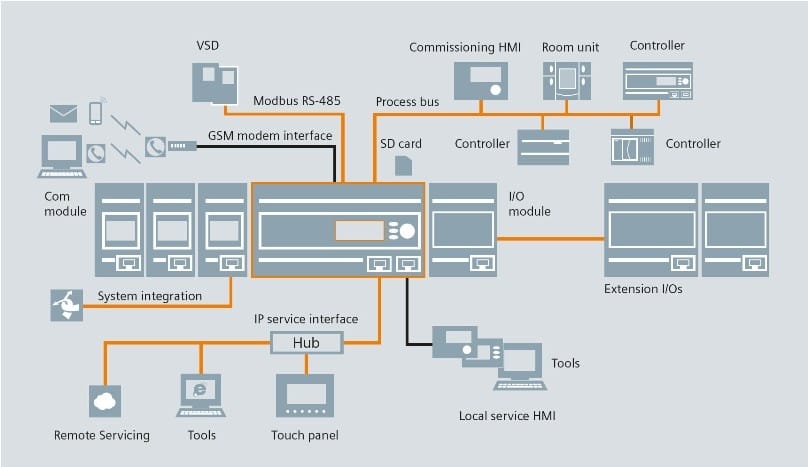
A fragmented design makes integration, diagnostics and future expansion difficult. Define network responsibilities, naming conventions, interfaces and ownership early.
3. Closed or poorly documented interfaces
If data interfaces are unavailable or proprietary, later integrations can become difficult or costly. Specify actual interoperability requirements instead of only brand names.
4. Too little data and inadequate alarms
A system without useful trends and prioritised alarms limits the facility team’s ability to identify problems and evaluate energy performance.
5. Maintenance is considered too late
Secure access, as-built documentation, backups, training and maintenance arrangements must be part of the initial project scope. A well-prepared detailed design reduces risk, although it cannot guarantee a flawless implementation.
What should a good detailed design contain?
The documentation should define required functions, point lists, automation and network topology, interfaces to other systems, responsibilities, control sequences, alarm priorities and commissioning criteria. It should make clear which party supplies, configures and tests each interface, rather than leaving every integration detail to the construction stage.
A lifecycle cost example
An apparently inexpensive system may become costly if every modification requires the original supplier, the installation has no reliable backup, or the building team cannot access historical trends. Early investment in understandable documentation, open interfaces and service access can reduce these risks even when the initial equipment cost is higher.
Acceptance testing and handover
Request functional tests under defined conditions, evidence of successful integration, alarm demonstrations, trend verification and operator training. Deliver as-built documents, current configuration backups and a list of authorised support contacts. A defect-free result can never be promised, but a structured approach reduces ambiguity and improves the chances of efficient commissioning and long-term support.
How to avoid expensive future changes
Include a functional specification and point lists in the tender, agree on communications and cybersecurity responsibilities, and make commissioning evidence a condition of handover. Require the final project documentation to reflect what was actually installed, not just what was initially planned.
Owner handover checklist
- Complete control descriptions, I/O lists and network diagrams.
- Current software and configuration backups with an agreed recovery procedure.
- Alarm catalogue, trend list and operating schedules.
- Documented integration permissions and supported third-party interfaces.
- Service contacts, maintenance responsibilities and training.
The objective is not to eliminate all future costs. It is to make the system understandable, extensible and economically maintainable over its expected service life.
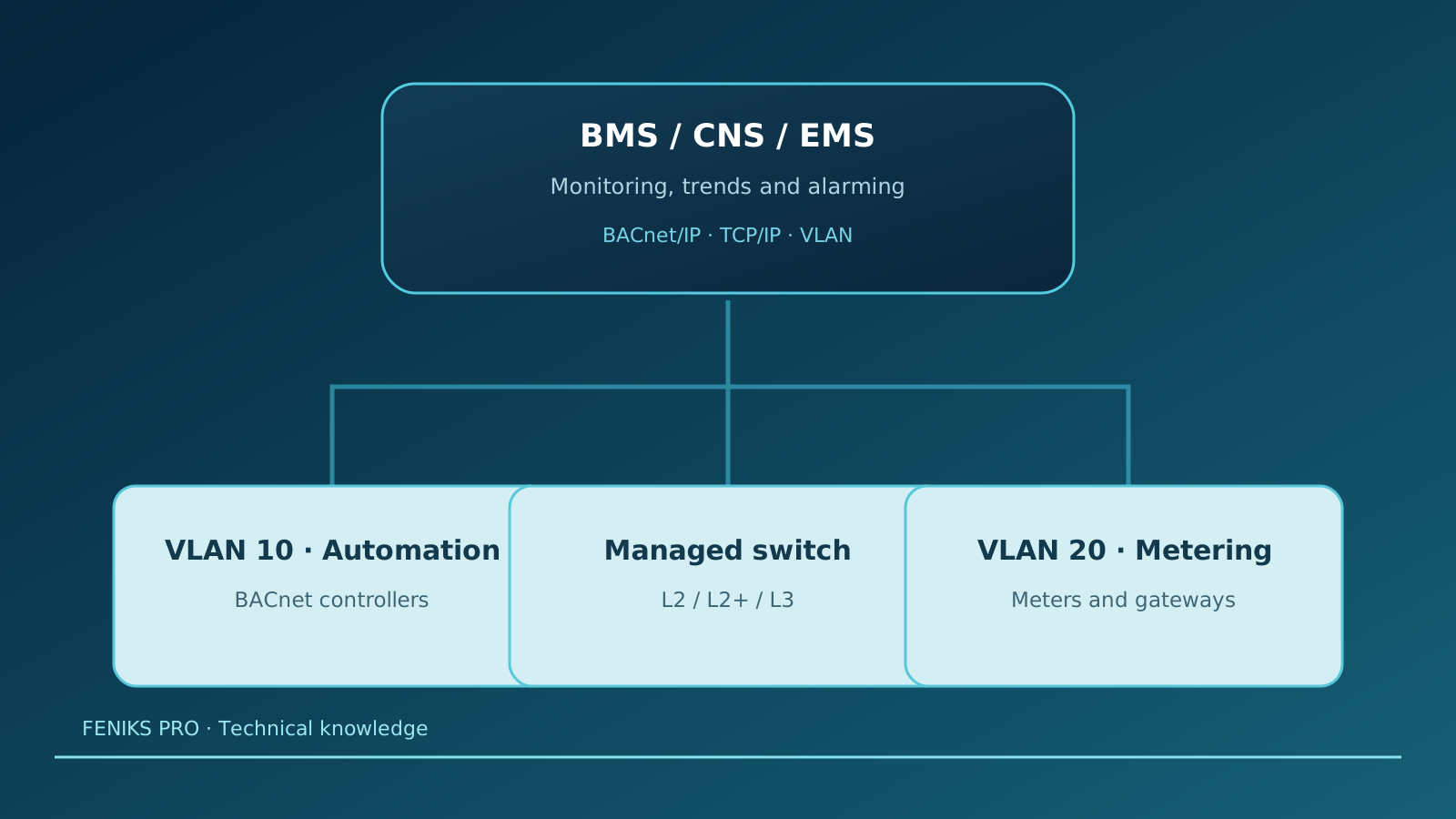 Network switches in building automation: L2, L2+ and L3 for BACnet/IPRead article ↗
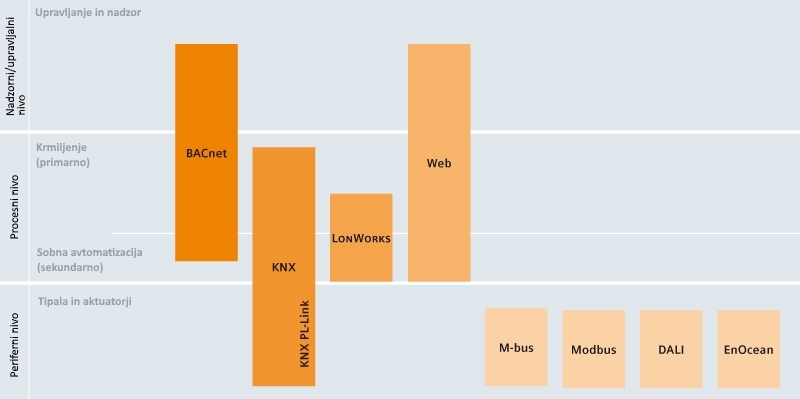 BACnet, Modbus or KNX: which protocol and when?Read article ↗
 EPBD 2026: implications for BMS, EMS and building automation in SloveniaRead article ↗